Jan 23, 2026
YouTube 1:34:14
Video
Cell Tower Health, Safety, and Policy Risks (Including 5G): Science, Policy, and Law
Cell Tower Health, Safety, and Policy Risks (Including 5G): Science, Policy, and Law
Description
Overview
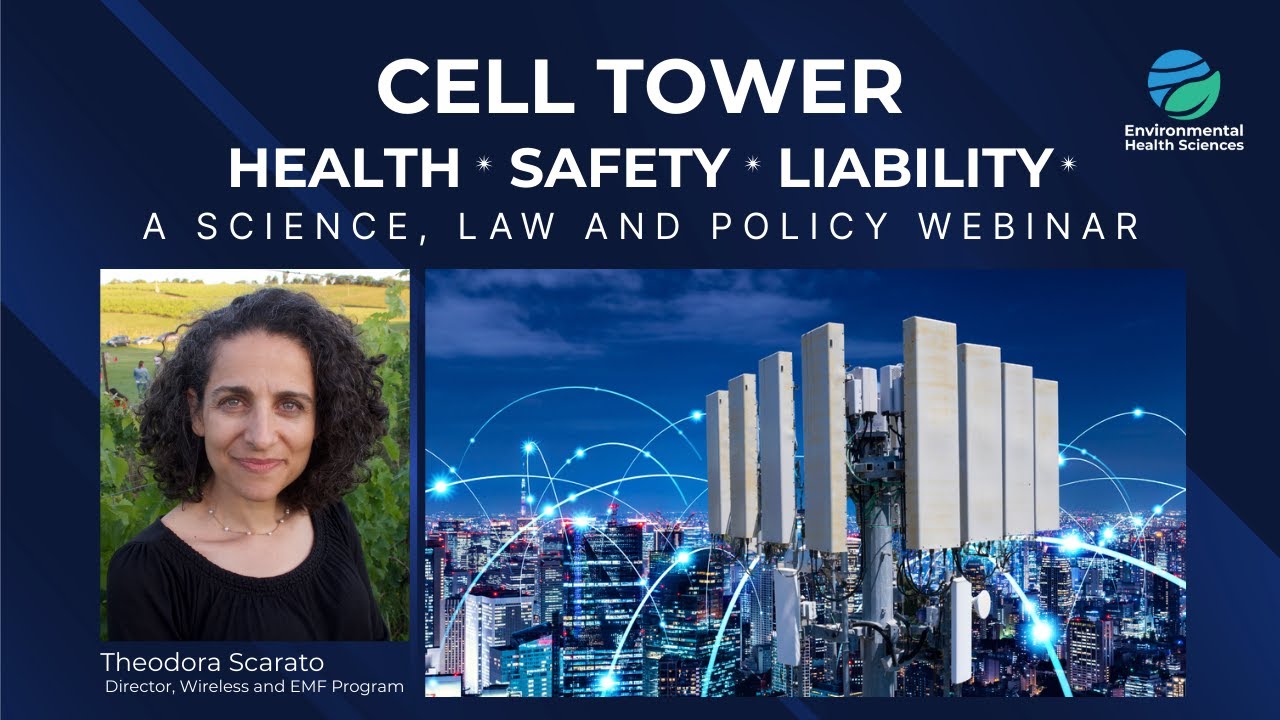
This comprehensive webinar, presented by Theodora Scarato, MSW, Director of the Wireless & EMF Program at Environmental Health Sciences, offers a detailed exploration of the complex risks and policy challenges posed by cell towers and 5G wireless infrastructure. It addresses a wide range of issues including health effects from radiofrequency (RF) radiation, physical safety hazards, financial impacts on communities, regulatory shortcomings, and the critical need for informed local decision-making and community protections.
Introduction to Cell Tower Concerns
The presentation begins with an introduction to the prevalence of cell towers near schools, homes, and neighborhoods, highlighting specific examples such as Wheaten High School in Montgomery County, Maryland, and Grand View High School in Ohio. Theodora Scarato shares her personal journey from initial skepticism about wireless technology to becoming a leading advocate focused on the health, safety, and policy implications of cell towers and 5G infrastructure.
She emphasizes that cell towers are increasingly placed in locations where people live, work, and play, often with little public notice or critical information provided to affected communities. The webinar underscores the urgency of understanding these issues amid a projected 300% increase in cell towers over the next six years in the United States.
Types of Cell Tower Installations
The webinar distinguishes among different types of wireless infrastructure:
- Macro cell towers: Tall, traditional cell towers with multiple antennas.
- Small cells (4G and 5G): Shorter towers or poles with fewer antennas, often installed in neighborhoods and near homes.
- Building-mounted antennas: Cellular antennas affixed to rooftops or other tall structures, sometimes camouflaged to blend with the environment.
All these installations emit RF radiation and carry associated health and safety risks.
Health and Biological Effects of RF Radiation
The webinar presents extensive scientific evidence documenting health risks linked to RF radiation from cell towers. These include neurological symptoms (headaches, dizziness, memory loss), reproductive harms, cancer risks, and cognitive impairments. Children are highlighted as especially vulnerable due to higher absorption rates of RF radiation in their developing brains, with studies showing significantly greater exposure in children compared to adults.
Key scientific findings discussed include:
- Long-term epidemiological studies reporting increased cancer rates near cell towers, such as a 10-year Brazilian study showing up to a 17-fold increase in cancer within 1600 feet of a tower.
- Experimental research demonstrating biological effects at exposure levels below current regulatory limits.
- Studies revealing cognitive decline in students attending schools adjacent to cell towers with elevated RF radiation.
- Reports of acute neurological symptoms among firefighters and community members living near cell towers.
The webinar also references appeals signed by over 250 scientists worldwide calling for reduced exposure and precautionary measures, emphasizing that the consensus on safety is not unanimous.
Physical Safety Hazards of Cell Towers
Beyond radiation, the webinar addresses physical risks associated with cell towers, including:
- Fire hazards: Documented cases of cell tower equipment catching fire, igniting surrounding vegetation, and causing structural damage, such as the collapse of a tower at Otay Ranch High School Stadium in California.
- Structural failures and fall zones: Risks from tower collapses during storms or high winds, falling ice accumulation, and dislodged equipment posing dangers to people and property within the fall zone.
- Hazardous materials: Presence of diesel fuel tanks for backup generators, lead acid and lithium-ion batteries, and herbicides used for weed control, raising environmental contamination and emergency response concerns.
- Maintenance and oversight gaps: Lack of regular upkeep and monitoring of tower sites, leading to unkempt grounds and potential safety hazards.
These hazards underscore the importance of setbacks and safety buffers, especially when towers are located near schools and residential areas.
Financial and Community Impacts
The webinar explores the economic consequences of cell tower siting, including:
- Property value reductions: Studies and realtor reports indicate that homes near cell towers can lose between 5% and 30% of their value, with buyers often reluctant to purchase properties with visible towers.
- Minimal financial benefits to schools: Lease payments for cell towers on school property are typically low (e.g., $1,000 per month plus additional fees per carrier), often insufficient to cover administrative and maintenance costs.
- Long-term lease complications: Multi-decade leases can limit community consent and complicate school renovation projects, sometimes forcing compromises that do not prioritize health or safety.
- Environmental justice concerns: Cell towers are disproportionately located near schools serving lower-income populations, raising issues of equity and community burden.
- Community advocacy: The webinar highlights the importance of public engagement and opposition efforts in influencing tower siting decisions and protecting vulnerable communities.
Regulatory and Policy Challenges
The webinar provides a critical analysis of the regulatory landscape, noting significant gaps and challenges:
- Outdated exposure limits: U.S. federal RF exposure limits were established in 1996 based on short-term heating effects in small animal studies, without consideration of long-term biological impacts or vulnerable populations such as children.
- Lack of ongoing research and monitoring: Federal agencies have largely ceased active research, measurement, and enforcement related to RF radiation, unlike other countries that maintain public databases and conduct regular monitoring.
- Federal preemption: The Telecommunications Act of 1996 restricts local governments from regulating wireless facilities based on environmental or health concerns, limiting community control and input.
- Regulatory capture and industry influence: The wireless industry exerts strong lobbying power, shaping laws and regulations to fast-track infrastructure deployment, with revolving door relationships between regulators and industry representatives.
- Insurance and liability issues: Insurance companies classify RF radiation as a high-risk pollutant and exclude coverage for related health claims, while wireless companies disclose potential financial risks to shareholders but often fail to inform impacted communities.
- Legal challenges: Recent court rulings have found the FCC's refusal to update exposure limits arbitrary and capricious, yet the agency has not responded with revised standards.
Expert and Community Perspectives
The webinar features insights from medical professionals, researchers, firefighters, and community members:
- Medical experts: Dr. Cindy Russell, a Stanford-trained physician, discusses the biological mechanisms of RF radiation toxicity, including oxidative stress and DNA damage, and reports on acute and long-term health effects observed in exposed populations.
- Firefighters: Testimonies reveal symptoms such as headaches, fatigue, and memory loss linked to cell towers on fire stations, leading to policy resolutions opposing tower placement on these facilities.
- Community voices: Parents and residents share personal health impacts and challenges in opposing local tower installations, emphasizing the need for transparency, public notice, and precautionary policies such as setbacks from schools and homes.
- Academic and scientific advocates: Experts highlight the inadequacy of current safety standards and call for precautionary approaches to protect public health.
Recommendations and Protective Measures
The webinar concludes with practical recommendations and resources for communities, policymakers, and advocates:
- Implement strong local ordinances with setbacks to protect schools, homes, and playgrounds from proximity to cell towers.
- Update federal RF exposure limits to reflect current scientific evidence on non-thermal biological effects and vulnerable populations.
- Establish comprehensive monitoring, measuring, and public reporting programs for RF radiation levels to ensure transparency and compliance.
- Increase community engagement, informed consent, and public notice in tower siting decisions.
- Learn from international examples of stricter regulations, public databases, and precautionary policies.
- Access detailed fact sheets, scientific studies, and advocacy tools available through Environmental Health Sciences and affiliated organizations.
Source Information
This content is derived from a 1 hour and 34 minute expert webinar titled "Cell Tower Health, Safety, and Policy Risks (Including 5G): Science, Policy, and Law," presented by Theodora Scarato, MSW, Director of the Wireless & EMF Program at Environmental Health Sciences. The webinar includes detailed discussions of scientific research, policy analysis, community case studies, and legal considerations related to cell towers and wireless radiation. The transcript provides extensive evidence and viewpoints from health professionals, researchers, and affected individuals, reflecting ongoing debates and regulatory challenges in the United States as of 2026.
For further information and resources, visit Environmental Health Sciences and sign up for their newsletter at https://ehsciences.activehosted.com/f/150.